
Executive Summary (TL;DR)
Maximize your AI infrastructure ROI through smarter GPU choices and real-time market insights. It’s not too early for IT leaders to think about 2030, and success depends on how your business can optimize cloud spend, avoid costly idle capacity, and prepare for post-quantum cryptography. Midmarket IT leaders should use GPUSeeker.com to help benchmark costs for long-term development plans for successfully deploying scalable, cost-effective AI solutions.
AI Success in 2026: Custom Silicon and Quantum-Ready Security Are Strategic Advantages
The focus of the AI industry is shifting from raw power to strategic efficiency. As detailed in our previous look at the strategic dilemma of calculating AI TCO, the introduction of the NVIDIA Rubin platform (promising a 10X reduction in inference token costs) has redefined the baseline for the next decade.
With the AI chip market projected to reach as much as $621 billion by 2032, organizations must now look beyond general-purpose GPUs. To remain competitive over the four or five years, your roadmap must account for the rise of domain-specific custom silicon and the immediate regulatory requirement for quantum-resistant security.
Custom AI Silicon and the $20 Billion NVIDIA-Groq Talent Move
The most significant trend of early 2026 is the idea of the AI market hitting an “Inference Flip” tipping point, where inference workloads overtake training as the primary driver of AI compute demand. This has triggered a race for deterministic, low-latency performance that general-purpose hardware cannot always provide.
This shift was cemented this week by NVIDIA’s massive $20 billion “acqui-hire” of the Groq engineering team. By absorbing nearly 80% of Groq’s staff and licensing its Language Processing Unit (LPU) technology, NVIDIA is integrating specialized, SRAM-based deterministic compute directly into its future stack. This move signals that the future of AI is moving toward domain-specific ASICs (Application-Specific Integrated Circuits) optimized for real-time agentic reasoning.
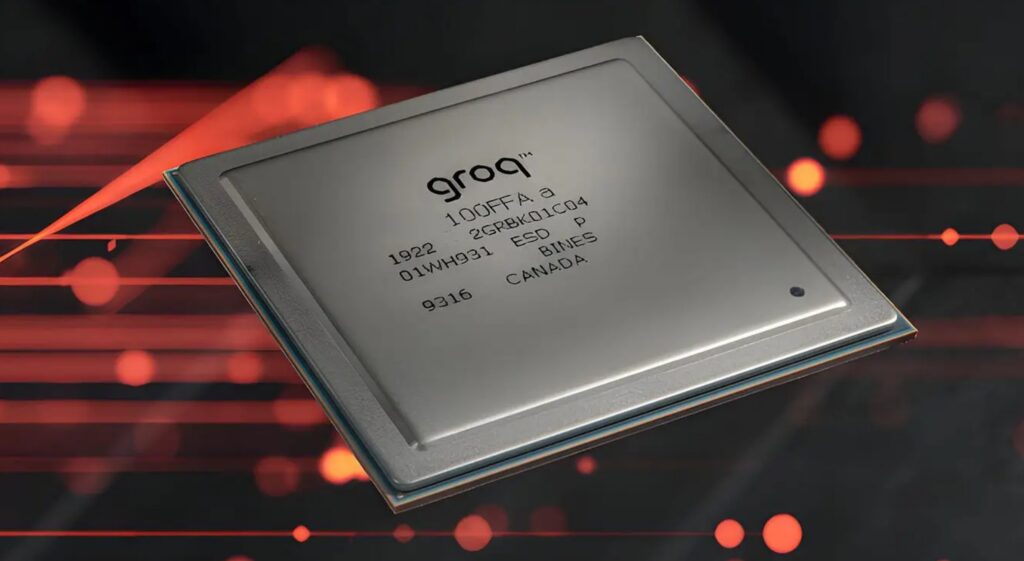
For midmarket AI developers, this will likely result in a more fragmented hardware market where the “best” chip is defined by your specific model’s architecture. So, in some cases you need the latest high-bandwidth NVIDIA or AMD GPU for massive Mixture of Experts (MoE) machine learning models, but other cases, it’s a specialized ASIC for ultra-fast LPU-style inference.
The 2030 Quantum Countdown: Migrating to NIST Post-Quantum Standards
While hardware speed dominates the headlines, a silent deadline is approaching for data security. The Quantum Insider has officially designated 2026 as the Year of Quantum Security, marking the transition from theoretical awareness to operational readiness.
The threat of “Harvest Now, Decrypt Later” attacks has made the migration to Post-Quantum Cryptography (PQC) a compliance imperative. NIST has already finalized the first three PQC standards (FIPS 203, 204, and 205) to protect against future cryptographically relevant quantum computers. Organizations must follow a strict roadmap:
- Immediate Inventory: Organizations must inventory all cryptographic assets and identify vulnerabilities.
- 2030 Deadline: Traditional 112-bit security strength algorithms are expected to be deprecated by 2030, with full transition to quantum-resistant standards mandatory for many sectors shortly thereafter.
Yes, you’re not alone in feeling that quantum computing is like nuclear fusion: It’s always 2-5 years away. But the CIOs and CISOs watching all the advances in high-performance compute and networking over just the past 18-24 months are pushing even the stingiest of CFOs to invest in PQC pilots now. Because not integrating quantum-safe infrastructure today could leave your 2030 AI models and their valuable underlying data lakes fundamentally exposed.
The AI Infrastructure Blueprint: Optimizing Silicon for High-Value SaaS
With the promise of lower inference costs and more efficient AI hardware coming online sooner rather than later, your organization’s success depends on choosing the right silicon at the right price. Whether you are training a foundation model or deploying real-time agents, the hardware bottleneck shifts from raw TFLOPS to memory bandwidth and VRAM efficiency. Over the next few years, CTOs and AI development managers in midmarket organizations wanting to future proof their AI infrastructure should consider GPUaaS as key to meeting the price-performance goals for their AI SaaS initiatives:
Add Your Heading Text Here
Industry Vertical | Mission-Critical AI Use Case | Preferred Build Stack (Training/Fine-Tuning) | Preferred Stack (Real-Time Inference) | Key Technical Drivers | 2030 Future-Proofing Roadmap |
Healthcare | Drug Discovery & Pathomics: Protein folding and 3D medical imaging analysis. | NVIDIA B200 (Blackwell): 192GB VRAM for massive molecular datasets. | NVIDIA H100 NVL: Dual-GPU signature for high-throughput diagnostics. | Data Sovereignty: HIPAA-compliant clusters and massive VRAM for protein models. | Transition to Rubin Vera for 2X memory bandwidth in genomic sequencing. |
Financial Services | Fraud Detection & Risk: Sub-second Monte Carlo simulations and GNN-based fraud alerts. | NVIDIA H200: 141GB HBM3e for training on trillion-token financial logs. | NVIDIA L40S / A100: Balanced price-to-performance for concurrent API calls. | Ultra-Low Latency: Deterministic compute for sub-second trade verification. | Implementation of NIST-compliant PQC for secure, quantum-safe transactions. |
Media & Streaming | Generative Visual FX: Real-time 8K video synthesis and AI-powered transcoding. | NVIDIA B200 / RTX 6000 Ada: Maximum memory bandwidth for neural rendering. | NVIDIA L40S: Optimized for AV1 encoding and low-latency generative frames. | Bandwidth Efficiency: High-speed data transfer for data-intensive video tasks. | Migration to Custom Video ASICs to reduce per-stream energy costs by 40%. |
Manufacturing | Digital Twins & Robotics: Physics-informed neural networks for autonomous assembly. | NVIDIA H100 / H200: High-density clusters for complex physical simulations. | NVIDIA L40S / IGX Thor: Industrial-grade reliability for edge-based robotics. | Parallel Processing: Multi-core workforce for independent assembly steps. | Shift to NVIDIA-Groq LPU integrations for deterministic robotic response times. |
Retail & E-commerce | Visual Search & Pricing: Real-time inventory optimization and multimodal search. | NVIDIA H100: Industry workhorse for recommendation engine training. | NVIDIA H100: Elastic scaling to handle peak traffic (e.g., Black Friday). | Unmatched Scalability: Instant resource provisioning for global demand surges. | Leverage Rubin NVL72 racks for 10x lower token costs in customer service agents. |
Why GPUaaS Matters for Your 2030 TCO
Choosing the wrong GPU can result in a 15% to 27% waste in cloud spend due to idle capacity or unoptimized hardware-model alignment. Future proof AI infrastructure isn’t unobtainable. However, by 2030, the AI divide will be defined by those who can successfully navigate the transition from general-purpose GPUs to domain-specific ASICs.
GPUSeeker.com acts as your “Expedia for Neocloud,” providing real-time pricing on GPUaaS that helps you avoid hidden charges by comparing all-in rates from top providers such as Lambda, Nebius, Vultr, and more. Our constantly updated database gives you the inside scoop on B200 and other top AI GPU hardware availability. Track the rollout of next-gen AI silicon to ensure your high-value projects stay ahead of the technical curve.
Don’t overpay for the future. Visit GPUSeeker.com today to benchmark your 2026 strategy and secure the compute you need for the road to 2030.