
Executive Summary (TL;DR)
Midmarket companies in 2026 are shifting to neocloud GPUaaS because it delivers predictable cost‑per‑task economics, faster time‑to‑value, and lower platform overhead than hyperscalers. The report identifies the NVIDIA L40S as the leading GPU for inference and the NVIDIA A100 80GB as the best value for training and fine‑tuning, driven by expected 2026 price compression. VRAM needs vary by workload, with inference requiring ~2 bytes per parameter and QLoRA fine‑tuning requiring 1.5×–2× more. Industry‑specific recommendations highlight L40S, A6000, H100, A100, and RTX 4090 depending on use case. Developers increasingly rely on GPUSeeker.com to compare neocloud pricing, navigate GPU volatility, and book infrastructure aligned to midmarket AI requirements.
Why Midmarket Companies Choose GPUaaS for Maximum ROI and Efficiency
The U.S. midmarket, defined by Gartner as a company with annual revenues between $50 million and $1 billion and employee counts ranging from 100 to 1,000, represents a critical, high-growth segment for AI solutions in 2026. Developers creating AI solutions—specifically AI SaaS solutions using GPUs for AI training and inference—targeting midmarket companies face unique pressures. Midmarket businesses prioritize rapid return on investment (ROI) and operational efficiency. Many AI devs and IT leaders aren’t seeing that quick ROI from hyperscale cloud providers (AWS, Microsoft Azure, and Google Cloud).
Why are Neoclouds Better Than Hyperscalers for Midmarket AI Solutions?
Neocloud GPU infrastructure often beats hyperscalers in every metric because midmarket CIOs and CFOs care about predictable, task‑level economics. Overall, these decision makers value a rapid time‑to‑value rather than broad cloud platform features. Hyperscalers are typically the go-to choice for large enterprises with deep platform commitments. But the ecosystem lock‑in introduces platform overhead and opaque marginal costs that complicate per‑task pricing for midmarket CIOs and CFOs.
Compared to hyperscalers, the neocloud providers are worlds apart. Neoclouds explicitly position themselves around AI‑first, developer‑centric pricing and efficiency for GPU as a Service (GPUaaS) infrastructure. Neoclouds enable AI developers to translate their infrastructure spend directly into product metrics like cost‑per‑inference or cost‑per‑token. This helps simplify an AI solution’s go‑to‑market and margin modeling. Independent reporting finds neoclouds are gaining traction with AI developers. Neoclouds offer purpose‑built GPU environments that reduce operational complexity for inference workloads along with the effective cost per task. These advantages going into 2026 are why “neoclouds,” noted Leo Gergs, Principal Analyst at ABI Research, “reflect a longer-term shift toward more tailored, agile infrastructure for AI.”
At GPUSeeker.com, we help AI developers search, compare, and book GPUaaS resources to deliver their innovative AI solutions. While hyperscalers offer many advantages when it comes to delivering raw compute power at a global scale for large enterprises committed to AI, it’s a much different story for AI developers delivering SaaS solutions to midmarket companies. That’s why GPUSeeker.com has created this guide for developers planning to deliver AI SaaS solutions in 2026.
Why Should AI Developers in the Midmarket Choose Neocloud GPUaaS?
Midmarket companies are strategically focused on generating measurable, operational value by embedding Generative AI (GenAI) capabilities directly into core enterprise systems such as ERP, CRM, and SCM. This integration is intended to accelerate decision-making processes and reduce manual workloads across various departments, from finance optimization to tailored onboarding programs.
A crucial characteristic of this segment is the advantage of focus and speed of execution. Leaner teams and shorter decision cycles allow midmarket organizations to implement targeted AI use cases that deliver faster operational value compared to larger, more bureaucratic organizations. Consequently, the developer’s procurement strategy is highly pragmatic and cost-sensitive. They require infrastructure that minimizes the time-to-value and ensures high performance without the complexity or long-term commitment associated with traditional hyperscalers. The underlying procurement metric must therefore transition away from simple hourly rental fees toward standardized metrics of efficiency, such as cost-per-token.
Quick Reference: Compare Neocloud GPUaaS to Hyperscaler AI Infrastructure
Attribute | Neocloud GPUaaS | Hyperscalers (AWS, Azure, GCP) |
Cost model | Cost per task / cost per token | Instance per hour / vCPU+GPU billing |
Platform overhead | Low; AI first stack | High; broad ecosystem |
Pricing transparency | High; unit economics visible | Variable; discounts & egress |
Midmarket fit | Strong; predictable bills | Weaker unless already committed |
What GPUs Should AI Developers of Midmarket Solutions Use in 2026?
The 2026 GPU market for AI SaaS solutions targeting companies in the midmarket is predicted to feature a pronounced divergence based on workload requirements. The ability of GPUSeeker.com to aggregate near real-time pricing for these cards will capitalize on this projected price volatility.
What GPUs Are Recommended for AI Inference in 2026?
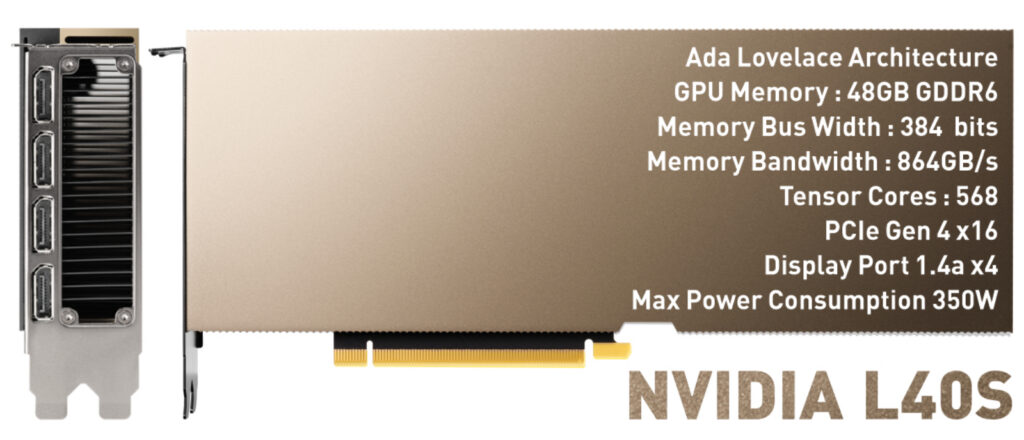
For inference and sustained production workloads, the NVIDIA L40S is forecast to dominate. In 2025, consumer-grade NVIDIA GPUs such as the RTX 4090 for gamer desktops and pro workstation cards such as the RTX A6000 dominated AI inference, media render farms, and other sustained production offerings. However, going into 2026 it’s predicted that prices will drop low enough on the new four year-old NVIDIA L40S to have these datacenter GPUs delivers the lowest cost-per-token for inference workloads. NVIDIA L40S GPUs achieve a cost advantage even over the A100 despite having lower raw speed, primarily due to a 35% lower hourly rate.
Midmarket IT leaders should look at the L40S as a strategic choice for AI teams focused on production volume and cost efficiency. Specialized providers such as Vultr, RunPod, and other GPUSeeker.com partners actively feature the L40S and similar high-throughput, data-center-ready cards like the RTX A6000.
What GPUs Are Recommended for AI Training in 2026?
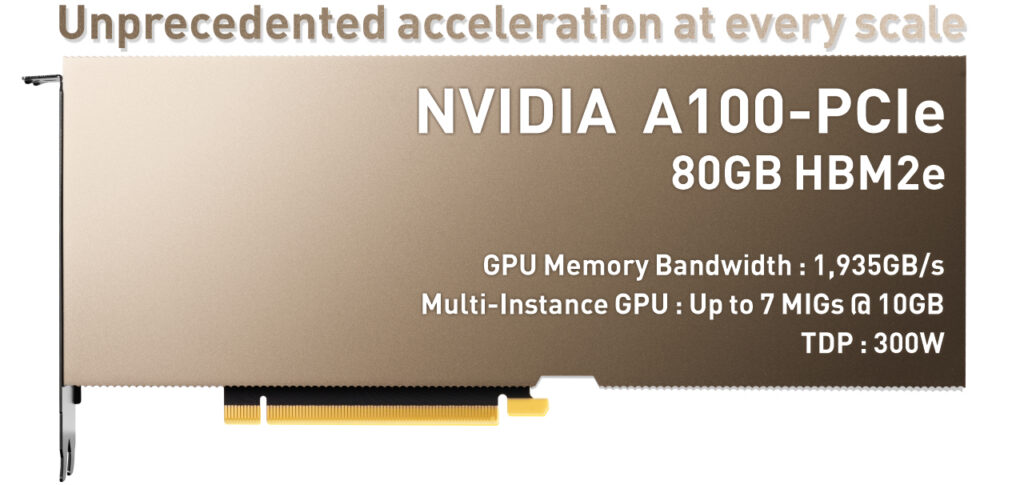
For training and heavy fine-tuning workloads, the NVIDIA A100 80GB will become the optimal value proposition for midmarket AI. Industry analysts agree that AI training models running in the so-called “AI factories” planned for 2026 will use NVIDIA’s successors to current-generation Blackwell and Rubin GPUs. However, analysts also expect a significant volume of datacenter-class NVIDIA A100 and H100 units will enter the market in 2026 following the expiration of initial large reservations. This supply increase is expected to drive price compression, significantly reducing the hourly rental cost of the A100.
Given its massive VRAM capacity and proven enterprise reliability, the A100 80GB will be the most cost-efficient choice for midmarket AI developers requiring high-capacity clusters for large-scale fine-tuning projects, especially in regulated sectors like healthcare and financial services.
How Much VRAM is Required for AI Inference vs. Fine-Tuning?
For all AI developers, optimizing the amount of on-GPU memory (VRAM) consumption is the core constraint for achieving AI project affordability. As of the writing of this blog post, memory chip prices are rising. To contain costs, AI workload assessment is critical, as inference (the lightest task) typically requires approximately 2 bytes per model parameter, while fine-tuning AI models using memory-efficient techniques such as Quantized Low-Rank Adapter (QLoRA) may demand 1.5X to 2X the inference VRAM.
Training massive foundational AI models is cost-prohibitive for the midmarket developer, often costing tens of thousands of dollars for multi-day training runs. Therefore, AI developers should plan to adopt neocloud GPUaaS infrastructure based on their needs for:
- Inference-optimized hardware (L40S)
- Fine-tuning smaller models (7B-30B) using consumer-grade cards
- Using A100 clusters specifically for highly complex, proprietary 70B fine-tuning needs in regulated sectors
Using the advanced search functions on GPUSeeker.com empowers developers to find high-value inference or small-scale fine-tuning clusters based on the “Minimum RAM” filter today.
GPUaaS Infrastructure Recommendation Table (By Industry)
The strategic GPU recommendations for 2026 are summarized below, leveraging the forecasted price compression of high-VRAM A100s and the established cost efficiency of the L40S for production inference:
Industry Vertical | Primary AI Use Case | Dominant Workload | VRAM Target (Quantized) | Recommended 2026 GPU (Type) |
Media & Streaming | Personalized RAG/Content Recs | Inference (Low Latency) | 48GB (High Throughput) | NVIDIA L40S (Cost Leader) |
Manufacturing | Computer Vision / Physical AI | High-Speed Inference (Real-Time) | 16GB – 48GB | NVIDIA L40S / RTX 6000 Ada |
Financial Services | Compliance/Fraud RAG | High VRAM Inference (Secure, SLA) | 48GB – 80GB+ | NVIDIA A6000 / H100 |
Healthcare | Patient RAG / Admin Automation | Fine-Tuning (LoRA 70B) | 160GB+ (Multi-GPU) | NVIDIA A100 80GB (Price Compressed) |
Retail & E-Commerce | Logistics/Chat Agents | Inference / Small Fine-tuning | 24GB – 48GB | NVIDIA RTX 4090 / L40S |
The anticipated influx of A100 and H100 inventory from expiring large-scale reservations in 2026 is expected to intensify pricing pressure, leading to falling prices. H100 rental rates already saw significant declines in 2025, moving from $8 per hour to approximately $2.85–$3.50 per hour. GPUSeeker.com helps AI developers successfully navigate through this price volatility by offering near real-time pricing aggregation, allowing midmarket buyers to achieve the significant cost advantages necessary for positive ROI.
How Can Developers Find the Best GPU Prices for AI Projects?
Midmarket AI developers often employ a bifurcated infrastructure strategy: high-risk, low-cost compute for iterative development, and high-SLA compute for production deployment. GPUSeeker.com helps AI development leaders and IT decision makers at midmarket companies to search, compare, and source AI GPUaaS based on a vendor-neutral database we keep updated in near real time. Some of the AI GPU for rent providers available to search on our platform include:
- Lambda AI: Recognized as a top neocloud provider, Lambda offers high performance, enterprise reliability, and a strong focus on AI/HPC workloads.
- Vast.ai: This decentralized marketplace model offers substantial cost savings, with consumer-grade GPUs like the RTX 4090 often listed at very low hourly rates ($0.20–$0.50/hr). Vast.ai offers on-demand and “spot instances” for GPUs, but this model carries variable reliability and a high risk of preemption (interruption), making it unsuitable for customer-facing production inference. However, this provider is great for development, experimentation, and non-time-sensitive batch processing.
- Vultr and RunPod: These providers offer a balanced approach, known for developer-friendly user experiences, transparent pricing, and robust infrastructure. Vultr’s composable approach, partnering with enterprises to scale AI operations cost-effectively, makes it highly appealing to the midmarket segment.
Why You Should Use GPUSeeker.com to Compare Neocloud GPUaaS
The 2026 AI infrastructure landscape for the U.S. midmarket is characterized by a strong move toward inference-heavy, ROI-driven solutions requiring specialized GPU infrastructure. This market segment demands a procurement experience that prioritizes cost efficiency and reliability transparency. Developers working on high-value AI projects in the midmarket can use the free search on GPUSeeker.com a purpose-built neutral neocloud price aggregation platform. We are the “Expedia for Neocloud” empowering AI developers to find, compare, and book the GPUaaS resources they need to deliver their projects without breaking the bank.
Visit https://gpuseeker.com/dashboard today to see the latest deals on neocloud GPUaaS infrastructure for your AI project.