
Executive Summary (TL;DR)
The AI infrastructure market in early 2026 just experienced a strategic pivot: the promise of 10X cheaper inference via the new NVIDIA Rubin platform versus the immediate availability and cost-efficiency of Blackwell and L40S hardware. While hyperscalers and neoclouds have committed to Rubin, volume availability for GPUaaS is not expected until H2 2026. Decision-makers must now weigh the “early adopter tax” against the long-term predictability of ownership models when calculating AI TCO, particularly as enterprises reach an economic tipping point when cloud spend hits 60–70% of on-premises costs.
NVIDIA's Rubin Revolution and the Early Adopter Tax
It’s only the first week of 2026 and the AI infrastructure landscape has already been fundamentally reshaped. Monday’s CES 2026 keynote by NVIDIA CEO Jensen Huang detailed the value propositions of the new NVIDIA Rubin platform—a next-generation architecture that promises to slash inference costs by a staggering 10X compared to the Blackwell generation. While this sounds great on paper, a future where mainstream AI adoption comes at a fraction of current costs, it also intensifies the strategic dilemma for midmarket companies: do you wait for the latest and greatest or do you lock in your infrastructure today?
NVIDIA’s keynote at CES 2026 outlined a future where the Rubin platform—featuring the new Vera CPU, Rubin GPU, and HBM4 memory—will deliver a 10X reduction in inference token costs. However, every AI infrastructure decision maker and development team lead should look at this realistically. Yes, the Rubin GPU platform promises high performance and long-term savings, but any PC gamer knows that buying the NVIDIA Hot New Thing™ is traditionally expensive and difficult to procure at launch.
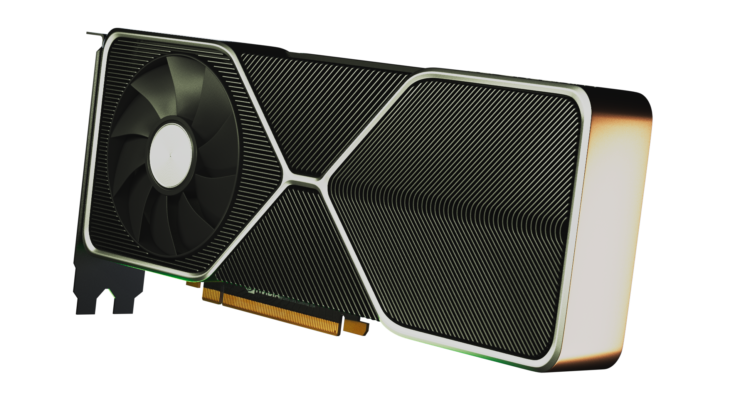
Historically, the arrival of a new architecture means that last year’s model suddenly becomes the most cost-effective path for developers. We know all of the Big Cloud hyperscalers will deploy NVIDIA Rubin hardware, and top neoclouds like CoreWeave, Lambda, and Nebius have also committed to Rubin. But even at “full production” today, NVIDIA and those cloud partners can’t deliver Rubin-based GPUaaS until at least H2 2026. That’s because as we’ve already established, NVIDIA Rubin isn’t just swapping out a GPU card; it’s a whole hardware architecture change. So, even if the inference costs and TCO reductions are dramatic when you’re on the new architecture, getting that new architecture deployed, adopted, and mainstream won’t happen any time soon.
In the short term, most organizations with AI SaaS initiatives can achieve cost-effective inference at scale by choosing:
- Legacy Blackwell GPUaaS: As expected, we’re seeing some price drops as providers prepare for Rubin.
- L40S Clusters: Available for high-volume production at lower TCO for projects not requiring bleeding-edge Rubin performance.
- Low-Cost Instances: GPUSeeker is seeing some cloud GPU instances for as low as $0.03 per hour.
xAI Funding and the $20 Billion AI Infrastructure Investment
While midmarket firms calculate their hourly rental rates, the world’s largest AI players are doubling down on owning their compute. Just hours after the Rubin announcement, Elon Musk’s xAI closed a massive $20 billion Series E funding round backed by NVIDIA and Cisco. This capital is earmarked specifically to expand its Colossus supercomputer, which now hosts over one million H100 GPU equivalents.
This follows the precedent set in late 2025 when Tesla signed a $16.5 billion agreement with Samsung for custom AI chips to power its self-driving cars and humanoid robots. Musk’s strategy highlights a critical shift: the value of AI infrastructure is moving from raw compute to optimized compute power tailored for specific tasks. When your workload is persistent and massive, owning your own fortress of compute becomes the only way to achieve long-term cost predictability.
Why Hybrid AI Infrastructure is the New Standard
Many midmarket and enterprise organizations are moving toward a Hybrid AI Infrastructure model to balance agility with data sovereignty. Research shows that 68% of companies using AI in production have adopted hybrid hosting models. Choosing to deploy hybrid AI infrastructure depends on your use case:
Deployment Model | Primary Use Case | Strategic Value |
On-Premise Fortress | High-volume, predictable, and latency-sensitive workloads. | Data sovereignty and sub-second response times. |
Public Cloud Agility | Rapid prototyping and burst capacity. | Immediate access to latest hardware like Rubin/Blackwell. |
Compare GPU Cloud Rates and TCO with GPUSeeker.com
Jensen Huang’s CES 2026 keynote has set the destination for 10X cheaper inference in the future, but GPUSeeker.com provides the map for today’s budget. While the world waits for Rubin’s volume production in 2H 2026, you can lower your TCO now by capitalizing on the price drops of legacy Blackwell and L40S clusters.
According to Deloitte research, organizations reach a tipping point where on-premises deployment becomes more economical than cloud services at 60% to 70% of equivalent cloud spending. For large health systems or financial institutions with stable workloads, this ownership model can be significantly cheaper after 3-5 years than ongoing subscription costs.
Stop guessing your ROI. Use the GPUSeeker.com comparison tools today to find the most cost-effective path for your 2026 AI roadmap—whether that’s renting the latest Rubin power or buying the legacy Blackwell GPU value.
Coming next in our final installment: Part 5: Custom Silicon, Quantum Readiness, and the Blackwell Era – Future-Proofing Your AI Infrastructure for 2030.