Executive Summary (TL;DR)
Midmarket companies seeking high-performance, cost-effective AI compute can overcome cloud market fragmentation with GPUSeeker.com, the ultimate AI GPUaaS price aggregator. Instantly compare bare-metal GPU availability, performance-per-dollar, and zero-commitment options across top neocloud providers in real time. GPUSeeker helps AI innovators reduce the virtualization tax with direct access to the latest GPU hardware at affordable prices.
Why Neoclouds Deliver Fast, Cost-Effective GPUaaS
In the first installment of our series published way back in 2025 😏, we explored why U.S. midmarket AI developers are increasingly turning toward neocloud providers to escape the constraints of legacy hyperscalers. Now that 2026 has officially started, this massive 5-part series is delving into a critical reason for this shift: the Virtualization Tax.
For years, the industry accepted virtualized cloud instances as the gold standard for flexibility. But as billions of dollars of high-performance AI silicon is added and abstracted into hyperscale clouds, any performance overhead of these virtual layers suddenly becomes a strategic liability. For midmarket firms in finance, healthcare, and manufacturing, the difference between virtualized and bare metal is the difference between an AI SaaS solution that ships in days and one that stalls for weeks.
What is the “Virtualization Tax" for AI?
The Virtualization Tax is a list of hidden costs AI developers often pay when using shared computing infrastructure in cloud environments. In a traditional hyperscaler environment (AWS, Azure, GCP), you rarely interact with the physical hardware. Instead, you operate within a virtual machine (VM) managed by a hypervisor. This software layer allows the provider to carve up a single physical server into multiple isolated environments, maximizing their own hardware utilization.
While virtualization is excellent for web hosting or general-purpose databases, it is inherently taxing for AI applications. Artificial Intelligence workloads, particularly large-scale model training and high-throughput inference, require direct, high-speed access to the GPU, memory, and networking fabric. When a hypervisor sits between your code and the silicon, it introduces a layer of abstraction that saps performance.
Recent benchmarks show that while hypervisor overhead might be a negligible 4-5% in controlled laboratory settings, real-world AI deployments often experience a 15% to 25% performance penalty compared to bare-metal setups. This means the Virtualization Tax results in slower training cycles, higher latency, and ultimately, wasted capital for AI SaaS projects.
Why AI Workloads Are Different
Unlike standard applications that may experience “bursty” CPU usage, AI training and inference typically run at near-100% GPU utilization. In the virtualized environment AI developers operate under with a typical hyperscaler, this creates the noisy neighbor issues we discussed in Part 1 of this series of blog posts.
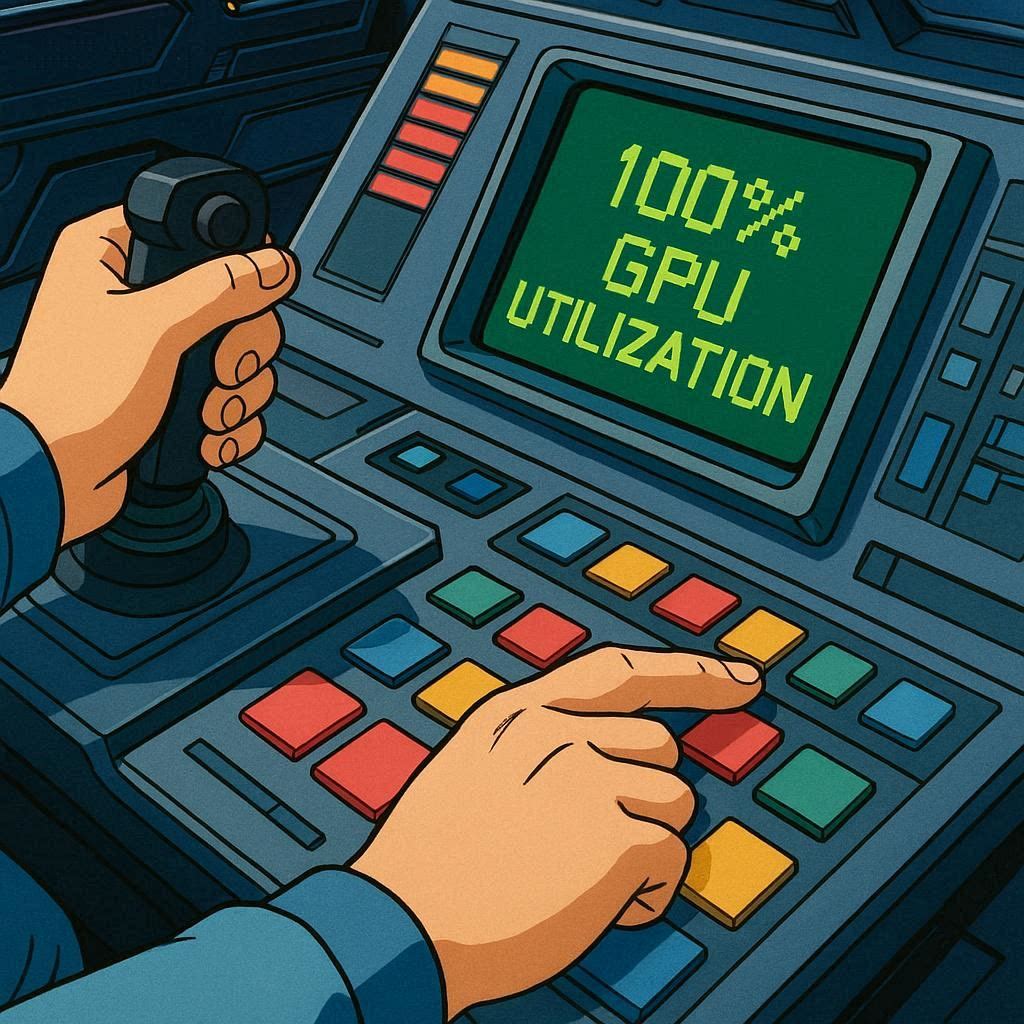
If another tenant on the same physical host starts a heavy computation, your performance can fluctuate wildly. For a developer, this lack of deterministic performance makes it nearly impossible to accurately forecast costs or delivery timelines.
Bare Metal GPUaaS: Unleashing the Raw Power of Silicon
As we outlined in our previous blog post, the “Neocloud Revolution” is built on Bare Metal GPUaaS. Providers like Lambda, Vultr, and other neoclouds have disrupted the market by giving developers direct, raw access to the underlying hardware. By removing the hypervisor, neoclouds offer several critical advantages:
- Zero-Overhead Performance – On bare metal, your application communicates directly with the AI GPU’s architecture. There is no intermediate software translating instructions, which effectively eliminates the 15-25% performance lag found in virtualized clouds. For a midmarket company training a 70 billion parameter model, gaining 20% efficiency isn’t just a technical win—it’s a 20% reduction in their total compute bill.
- Full Memory Bandwidth and RDMA – Modern AI models are increasingly memory-bound. To process trillions of tokens, GPUs must move data at incredible speeds. Bare-metal AI GPU environments allow for the full use of Remote Direct Memory Access (RDMA) and GPUDirect technologies. This ensures that data moves between GPUs and across nodes via specialized technologies (usually either InfiniBand or high-speed Ethernet) without ever touching the CPU or a virtual switch, maintaining the sub-millisecond interconnect speeds required for multi-node training.
- Predictability and Sovereignty – In the highly regulated worlds of healthcare and finance, knowing exactly where your data is being processed is a requirement, not a luxury. Bare-metal servers provide a clear “chain of custody” from the application to the physical hardware. This isolation ensures that your workloads are never at the mercy of a “noisy neighbor” and that your data remains physically segregated from other tenants.
Industry Impact: Milliseconds Matter for AI
The shift from virtualized to bare metal is most visible in industries where “near-real-time” is the baseline expectation:
- Financial Services: High-Frequency Inference – In fintech, AI is used for everything from fraud detection to high-frequency trading (HFT) simulations. A virtualized instance that adds a few hundred milliseconds of jitter can be the difference between catching a fraudulent transaction and losing millions. Financial AI developers are migrating to bare-metal providers like Vultr to achieve the predictable, ultra-low latency required for real-time agentic financial systems.
- Healthcare: Real-Time Diagnostic Speed – Consider a midmarket developer building an AI tool for real-time surgical imaging. In a virtualized cloud environment, network latency and hypervisor overhead can lead to a 3-to-5 second delay in image processing. In a clinical setting, this is unacceptable. By switching to bare-metal GPUaaS, these developers can achieve sub-second response times, delivering the “real-time” performance that was previously only possible with expensive on-premise hardware.
- Manufacturing: The Agentic Factory Floor – You can’t read anything about manufacturing today without seeing “Industry 4.0” today, but the fact is that modern manufacturing can benefit from AI agents managing complex supply chains and predictive maintenance in real-time. These Agentic AI systems rely on the consistent I/O throughput of bare-metal servers to run digital twin simulations. Any fluctuation in compute power can disrupt connections between the digital model and the physical factory floor, leading to costly downtime.
The Financial Math: Why Cheap Virtualization is Really Expensive
Hyperscalers often lure midmarket companies with “free credits” (as you can tell by the scare quotes, there’s always a catch to that) and the promise of pay-as-you-go simplicity. However, it doesn’t take much to see how the Virtualization Tax carries a heavy financial multiplier. If your model takes 20% longer to train because of hypervisor overhead, you aren’t just losing time—you are paying for 20% more GPU hours. When you combine this with the fact that nearly 27% of hyperscaler spending in AI projects is categorized as waste due to idle resources and hidden fees, the “convenience” of Big Cloud begins to look like a massive drain on R&D budgets.
In contrast, neocloud providers offer transparency and raw value. While an H100 instance on a major hyperscaler might cost between $3.50 and $5.00 per hour, specialized providers like Lambda or Runpod often offer the same (or better) bare-metal hardware for as low as $2.10 to $2.50 per hour.
Multi-Cloud Agility: Navigating the 2026 AI Landscape
The 2026 AI developer doesn’t have to choose between flexibility and performance. The maturation of the neocloud ecosystem allows for a hybrid approach. You can use a hyperscaler for your general-purpose web frontend and object storage, while shifting your “heavy lifting” (e.g., training and production inference) to a bare-metal neocloud partner.
The challenge, however, is the fragmentation of the market. How do you find which provider has bare-metal H100s available right now at the best price?
This is why GPUSeeker.com, the “Expedia for Neocloud,” is a crucial AI GPU search tool for midmarket companies. Our purpose-built price aggregator empowers you to bypass the noise and find the raw AI GPU power you need:
- Real-Time Availability: Instantly see which neocloud partners have bare-metal GPU resources ready for deployment.
- Performance-Per-Dollar Comparison: We help you see the true cost of your compute, factoring in the performance gains of bare metal over virtualized instances.
- Zero-Commitment Booking: Find the resources you need for a three-day training run or a year-long production launch without being locked into a rigid hyperscaler contract.
Don't Pay the Virtualization Tax for AI
For developers in 2026, the Virtualization Tax is no longer a sustainable cost for AI innovation. The midmarket companies that win will be those that prioritize computational efficiency and deterministic performance.
By ditching the hypervisor and embracing bare-metal neoclouds, you aren’t just saving money—you are giving your AI models the direct access to silicon they were designed to use.
Ready to see what your models can do without the tax? Search on GPUSeeker.com today to compare the world’s leading bare-metal GPU providers.
Stay tuned for Part 3: “The Hidden Cost of ‘Free’ and Why It’s Killing Your AI ROI.”